The Illinois Interchange Fee Prohibition Act (IFPA) was upheld in a federal court ruling, allowing the law to move forward after more than a year of legal challenges from banking groups. The decision could change how interchange fees are applied to card transactions. It also raises important questions for merchant services agents about compliance, transaction reporting, and potential impacts on long-term residual income.
If the law withstands appeals and similar legislation spreads to other states, it could mark one of the first major shifts in how interchange fees are applied within the U.S. payments system.
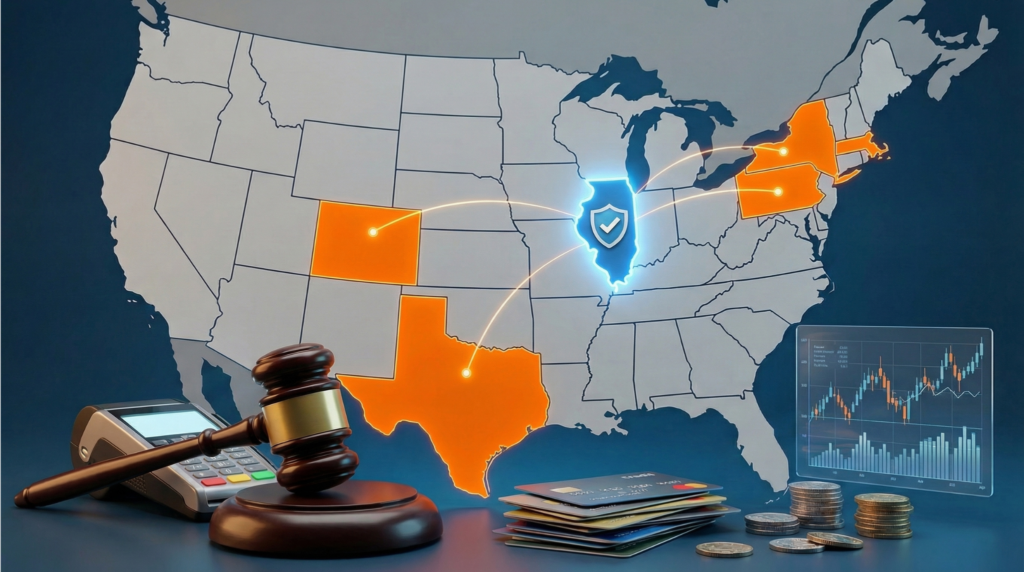
The Illinois Interchange Fee Prohibition Act prevents card networks from charging interchange fees on the sales tax and tips portion of credit and debit card transactions. Normally, interchange fees are calculated on the full transaction amount, including tax and tips.
Under the IFPA, those portions would be excluded when determining interchange fees.
The law is scheduled to take effect July 1.
Illinois will place a $1,000 monthly cap on how much merchants can earn for collecting sales tax on behalf of the state.
Banking organizations argued that federal banking laws override state laws, meaning Illinois should not be allowed to regulate interchange fees.
However, the court rejected that argument. The judge determined that payment card networks are responsible for setting interchange rates, meaning the law does not directly regulate banks.
Illinois-chartered financial institutions must still comply with the law. The court also found that the banks’ federal law arguments did not apply because interchange fees are imposed by the card networks rather than the banks themselves.
Because of that distinction, the court allowed the law to proceed.
Banking groups have said they plan to appeal the decision.

Merchant advocacy groups strongly support the ruling. Retail organizations say the change could save businesses and consumers millions of dollars annually by eliminating interchange fees on the tax and tip portions of transactions.
Supporters also believe Illinois could become a model for other states considering similar legislation. Lawmakers in 22 states have already introduced or discussed bills aimed at regulating interchange fees.
This ruling could have several implications:
If more states follow Illinois, payment systems may need to separate tax and tip amounts properly so interchange calculations can be adjusted. In many cases, merchants may need POS systems that clearly separate tax and gratuity line items in transaction data. How this will be implemented across different payment systems and processors is still uncertain.
Agents who understand evolving interchange rules can provide better guidance and support to their merchants.
If interchange structures change at the state level, payment networks could adjust pricing models or operating rules.
Because interchange fees are part of overall processing revenue, changes like this could affect agent residual income. If similar laws are implemented in additional states, the long-term impact could become more considerable.

As interchange regulations begin to gain traction at the state level, agents who stay informed will be better positioned to help merchants navigate changes, protect their payment infrastructure, and continue growing their portfolios.
The information provided here is for informational purposes only and focuses solely on payment processing. We do not endorse explicit or illegal content and encourage compliance with applicable laws and regulations. Readers should seek professional advice and use legitimate payment solutions while operating in this sector. We disclaim liability for any consequences resulting from the use of this information.

Brittany Hernandez, Marketing Coordinator at Elite Pay With a strong background in marketing and payment processing, I’m dedicated to helping agents better serve their merchants in today’s evolving payments landscape.